Posts

Cocamidopropyl Betaine (CAPB) in Skincare Products

Image
  Cocamidopropyl betaine is a fatty acid that is found in many personal hygiene and household products because it helps water bond with dirt, oil, and other debris, allowing them to be rinsed clean.   Researchers discovered that the irritation to eyes and skin is caused by two impurities that occur during the manufacturing process, rather than by CAPB itself.   If you're allergic to CAPB, it's possible that using it will cause skin or eye irritation. To avoid this problem, check labels and national product databases to see which products contain this chemical.   Palvi Chemicals ranks among the top Cocamidopropyl betaine suppliers in Nigeria .   CocoBetaine (Cocamidopropyl Betaine) is a 30 percent active aqueous surfactant solution derived from coconut oil. CocoBetaine (Cocamidopropyl Betaine) is a secondary surfactant in cleansing systems that contributes to viscosity and a smooth feel. Shampoos, bubble baths, and liquid hand soaps all contain it...
Difference between Sodium Lauryl Sulfate (SLS) and Sodium Laureth Ether Sulfate (SLES)

  Chemical Formula: CH3(CH2)10CH2(OCH2CH2)nOSO3Na   SLES stands for Sodium Lauryl Ether Sulfate. It appears as a yellowish-white paste and functions as an anionic surfactant or detergent in a variety of cleaning and personal care products, such as soaps and cosmetics.   Palvi Chemicals is one of the most popular Sodium Lauryl Ether Sulphate suppliers in Ghana .   SLES is used as a cleansing ingredient in a variety of goods in everyday life. Natural sources of Sodium Lauryl Ether Sulfate liquid include coconut oil and palm kernel oil. It is plainly seen in the ingredients section of the shampoo packet or container.   Surfactant sodium lauryl ether sulphate liquid is widely used. SLES, as a surfactant, lowers the surface tension between the product's constituents, and as a result of this unique characteristic, it makes an excellent foaming and washing agent. SLES is also widely used in household cleaners, self-care, and cosmetics products.  ...

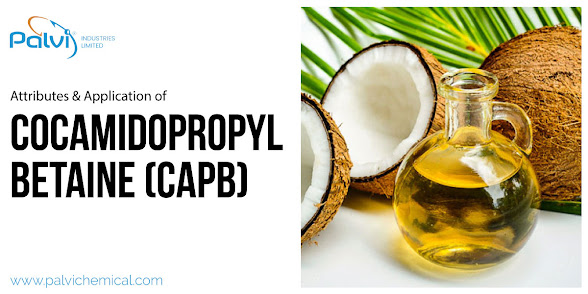
Attributes & Application of Cocamidopropyl Betaine (CAPB)

Image
  Cocamidopropyl betaine is a fatty acid used in many personal hygiene and household goods since it aids in the bonding of water with dirt, oil, and other debris, allowing them to be rinsed clean.   While it was originally thought that CAPB was an allergen, researchers have discovered that the irritation to eyes and skin is caused by two impurities that occur during the manufacturing process.   If you're allergic to CAPB, it's possible that using the substance will cause skin irritation or eye irritation. Check labels and national product databases to see which products contain this chemical to prevent this issue.   Palvi Chemicals ranks among the top Cocamidopropyl betaine suppliers in Morocco .   CocoBetaine (Cocamidopropyl Betaine) is a coconut oil-derived 30% active aqueous surfactant solution. CocoBetaine (Cocamidopropyl Betaine) is a secondary surfactant in cleansing systems that helps to create viscosity and provides a smooth feel. It's us...

Uses of Formaldehyde 37%

Image
  A popular precursor to more complex compounds and materials is formaldehyde. Formaldehyde-derived products include urea formaldehyde resin, melamine resin, phenol formaldehyde resin, polyoxymethylene plastics, 1,4-butanediol, and methylene diphenyl diisocyanate, in roughly decreasing order of consumption. To render crease-resistant fabrics, the textile industry uses formaldehyde-based resins as finishers.   Formaldehyde produces strong thermoset phenol formaldehyde resin, urea formaldehyde resin, and melamine resin when it is treated with phenol, urea, or melamine. These polymers are used in plywood and carpeting as permanent adhesives. They're also foamed for insulation and cast into moulded products. Formaldehyde resin production accounts for more than half of all formaldehyde consumption. Palvi Chemicals is one of the leading Formaldehyde 37% suppliers in Morocco . Niche uses: Disinfectant and biocide: Since formaldehyde in an aqueous solution kills most bacteri...

A brief overview about Sodium Lauryl Ether Sulfate (SLES)

  Palvi Chemical as a noteworthy Sodium Lauryl Ether Sulfate (SLES) in distributor Ghana and Nigeria in this blog compiles a brief overview about Sodium Lauryl Ether Sulfate (SLES) including its properties, manufacturing process, chemical formula and applications.   By definition, Sodium Lauryl Ether Sulfate (SLES) is an anionic detergent and surfactant majorly used in personal care products. It is popular as available in very cheap price. It is used as a foaming agent.   Palvi Chemical is a Sodium Lauryl Ether Sulfate (SLES) in suppliers Nigeria .   The chemical formula of Sodium Lauryl Ether Sulfate (SLES) is CH3(CH2)11(OCH2CH2)nOSO3Na.   Sodium Lauryl Ether Sulfate (SLES) is commercially produced from palm kernel oil or coconut oil. Its natural origin makes it safe for personal care products.   Palvi Chemical is a Sodium Lauryl Ether Sulfate (SLES) in exporter Nigeria.   Sodium Lauryl Ether Sulfate (SLES) is a surfactant and anionic de...

Phosphoric Acid – Features, Uses, Applications and Manufacturing Process

Image
  Phosphoric Acid is a weak acid that works as a sequestering agent. It is a useful mineral acid with white crystalline structure in purest form. Phosphoric acid is also called as orthophosphoric acid or phosphoric (V) acid. This blog by Palvi Chemicals – a Phosphoric acid distributor company in Qatar explains the features, uses, applications and manufacturing process of Phosphorous Acid. Features of Phosphoric acid: The features of Phosphoric Acid are as follows: Phosphoric acid is colorless, odorless, inorganic, non-hazardous, non-toxic and non-volatile in nature. Phosphoric acid has stability at high temperatures, low volatility, good ionic conductivity,   carbon dioxide and carbon monoxide tolerance. Palvi Chemicals is a Phosphoric Acid supplier company in Qatar who has compiled this list of uses and applications of Phosphoric acid: ·          Removal of rust from different metals ·      ...

An Overview of Phosphoric Acid

Image
  Phosphoric acid is colorless, odourless, and non-volatile weak acid, also used as an acidifying agent. It is a useful mineral acid. Other names of Phosphoric acid are orthophosphoric acid or phosphoric (V) acid.   It contains 85% concentration of water. In compound form, Hydrogen Peroxide is a colorless solid. Phosphoric acid is a useful inorganic acid with crystal structure. In purest form, Phosphoric acid forms a white crystalline structure. Other features of Phosphoric acid are non-toxic and odourless. Phosphoric acid is soluble in both alcohol and water. This blog post about ‘An Overview of Phosphoric Acid’ is compiled by Palvi Chemical - a Phosphoric Acid supplier company in Qatar.   Palvi Chemical is also a Hydrogen Peroxide exporter company in Qatar . For all kinds bulk order and supply of Phosphoric Acid and Hydrogen Peroxide, you can connect with Palvi Chemical. Popular two methods of production of Phosphoric acid are Thermal process and Wet process. The...