Posts

Unknown Facts about Zinc Sulfate
Image
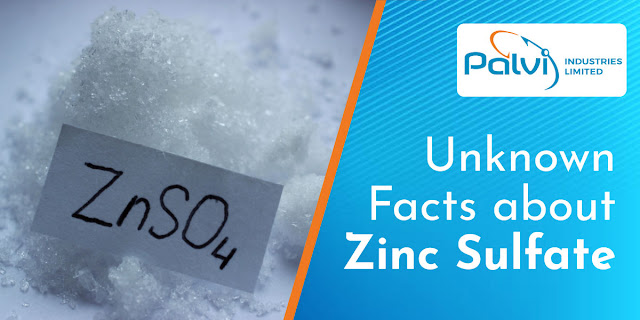
  Sulfur and zinc are combined in zinc sulphate. It's a herbicide that's commonly used to get rid of moss. Zinc sulphate toxicity is determined by the amount of zinc in the product. Zinc is an important nutrient for humans, animals, and plants. Natural sources of zinc include the environment, foods, and water. Working: In plants, zinc binds to proteins and organic acids. It inhibits the growth of moss and other plants in high quantities and destroys the cells, causing them to turn yellow. Direct Exposure: If you acquire zinc sulphate on your skin, breathe it in, or eat a product that contains it, you could be exposed. This can also happen if you get some on your hands and don't wash them before eating or smoking. By carefully following all label recommendations, you can keep your zinc sulphate exposure to a minimum.   Palvi Chemicals is one of the most respected and prominent Zinc Sulfate exporters in Nigeria . ●     Signs and Symptoms: Although...

Why Cocamidopropyl betaine is an essential ingredient in Skin Cleansers?

Image
  Cocamidopropyl betaine (CAPB) is a surfactant derived from coconut oil that is used in several liquid skin cleansers. Surfactants are detergents that reduce the surface tension of water and make it easier to moisten your face, allowing water to wash away the oil and debris from your skin. Surfactants are lipophilic (love oil) and hydrophilic (love water), allowing them to remove debris and oil from your skin. Palvi Chemicals is a noted as well as recognised Cocamidopropyl betaine distributor in Nigeria . Although certain surfactants are harder on the skin than others, Cocamidopropyl betaine rarely irritates the skin. Because of its thickening and foaming qualities, it's frequently used in cleansers to help hydrate the skin. Many infant soaps and shampoos contain Cocamidopropyl betaine. Some people, however, may be allergic to the chemical component. Consult a dermatologist if wearing cosmetics containing Cocamidopropyl betaine causes your skin to redden, itch, or flake. Pro...

What is the function of Cocamidopropyl Betaine?

Image
    You may find yourself trying to interpret personal care product labels if you're concerned about what you put on your skin. Haircare and skincare product ingredient lists might be perplexing. Ingredient names frequently sound like chemistry class subjects. As a result, you might be concerned about what you're exposing yourself to when you use your favourite facial cleanser or shampoo.   Palvi Chemicals is an excellent Cocamidopropyl betaine distributor in Nigeria . Cocamidopropyl Betaine: Cocamidopropyl betaine is one of the ingredients you might come across. It's a cleaning agent that can be found in a variety of goods. For decades, it's been utilised in personal care products, particularly those that clean the skin or hair. It won't provide you a thorough cleansing impact on your hair or skin if you use it alone, but it helps cleansers perform better when coupled with other substances. What is the function of Cocamidopropyl Betaine? Since the 1950s...

Everything you need to know about Calcium Chloride

Image
  Calcium chloride is a common calcium salt with a wide range of uses in both the home and the workplace. Calcium chloride has the chemical formula CaCl2 and has a molar mass of 110.983 grams per mol. The calcium cation (Ca2+) and two chloride anions make up this ionic molecule (Cl-). As demonstrated below, the bivalent calcium metal forms an ionic bond with two chlorine atoms.   Occurrence: The rare minerals sinjarite (dihydrate) and antarcticite contain calcium chloride in their hydrated forms (hexahydrate). Natural brine from salt lakes and salt deposits also contains huge levels of it.   Palvi Chemicals is one of the excellent and prominent Calcium Chloride suppliers in Nigeria .   Calcium chloride is made primarily by combining limestone (CaCO3) with hydrochloric acid (HCl).   CaCO3 + 2 HCl → CaCl2 + CO2 + H2O It can also be obtained as a major by-product of the Solvay process when the limestone is combined with NaCl solution to make soda ash ...

What are the physical properties and uses of Caustic Soda?

Image
    There is no odour to sodium hydroxide (NaOH). It is composed of solid white crystals that absorb water from the surrounding environment. Caustic or sodium hydroxide can cause injury to workers who come into touch with it. The degree of injury is determined by the amount, duration, and activity. It can cause temporary hair loss and burn the eyes, skin, and interior membranes.   Soaps, rayon, paper, explosive products, colours, and petroleum products are all made with sodium hydroxide. It can also be utilised for operations like cotton fabric processing, metal cleaning and processing, oxide coating, electroplating, and electrolytic extraction.   Palvi Chemicals is one of the most prominent Caustic Soda suppliers in Ghana . Physical properties: The pure form of sodium hydroxide is a colourless substance that is crystalline solid having a very high melting point (318°C / 604°F) and a significantly high boiling point (1,388°C / 2,530°F). It is extremely solu...

How and where is Calcium Chloride used?

Image
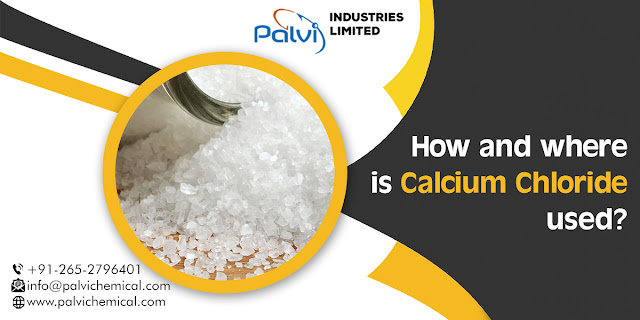
  Calcium chloride also widely popular as CaCl 2 , is nothing but an inorganic substance that is basically salt (chemical formula - CaCl 2 ). At ambient temperature, it is a white crystalline solid that is readily soluble in water. It is made by neutralising hydrochloric acid with calcium hydroxide. Calcium chloride is a hydrated solid that has the general formula CaCl 2 (H 2 O) x , where x can be any number between 0, 1, 2, 4, and 6. These chemicals are mostly used for deicing and dust management. The anhydrous salt is used as a desiccant since it is hygroscopic. Palvi Chemicals is one of the most prominent Calcium Chloride suppliers in Nigeria . Although non-toxic in small doses when wet, the non-hydrated salt's very hygroscopic qualities pose considerable risks. Calcium chloride can irritate moist skin by desiccating it. Consuming concentrated solutions or solid goods may result in gastrointestinal irritation or ulcers. Hypercalcemia can result from the consumption of calc...

Medical Applications, Importance & Adverse Effects of Sorbitol

Image
  Sorbitol is a sugar alcohol or polyol, which are water-soluble molecules found naturally in many fruits and vegetables. Sorbitol is also commercially synthesised from glucose for usage as a sweetener, texture, and moisture retainer in packaged foods and beverages. Medical Applications: ●     Laxative: Sorbitol-containing meals, like other sugar alcohols, can cause gastrointestinal irritation. Sorbitol can be used as a laxative either orally or through an enema. Sorbitol acts as a laxative by attracting water to the large intestine and promoting bowel motions. Sorbitol has been found to be safe for elderly people to take, yet it is not recommended without the guidance of a doctor. Sorbitol is found in various dried fruits and may contribute to prunes' laxative properties. In 1872, sorbitol was identified in the fresh juice of mountain ash berries. Palvi Chemicals is the distinguished Sorbitol exporter in Nigeria . ●     Other medical applica...